ASMR Car Restoration in 10 Minutes
The Art of Digital Automotive Restoration: Analyzing the ASMR Car Restoration in 10 Minutes Animation
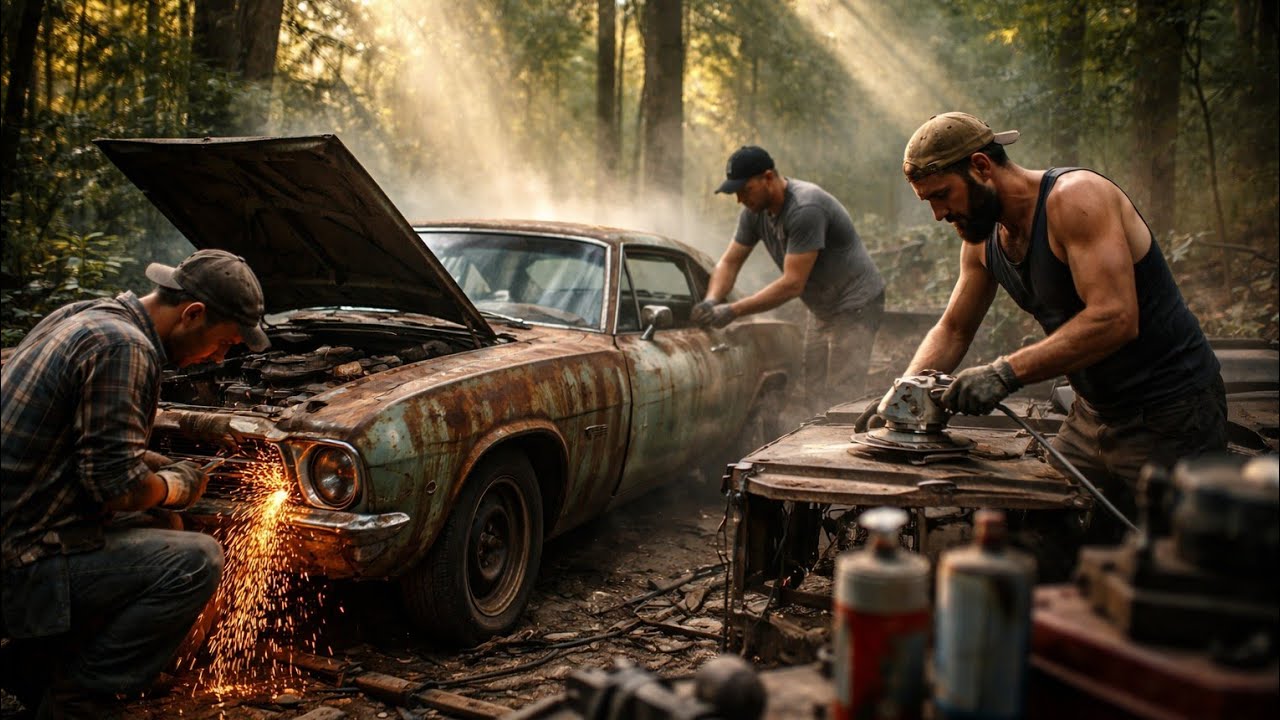
The intersection of digital art and automotive enthusiasm has given rise to a fascinating sub-genre of content: the 3D ASMR restoration video. Unlike traditional mechanic videos where grease and grit are real, these digital masterpieces offer a flawless, satisfying visual experience that appeals to both car lovers and graphic design aficionados. We are diving deep into a specific case study today, a video titled "ASMR Car Restoration in 10 Minutes," to understand the technical prowess required to create such animation.
Read too : Luxurious modern palace interior with marble floors and golden accents
For those who wish to learn the intricacies of hard-surface modeling and environmental design, analyzing this footage provides a masterclass in workflow. From the way light filters through a dense forest to the texture transformation of a weathered vehicle, every frame is a lesson in digital craftsmanship. Before we dissect the animation techniques, watch the full video below to understand the visual narrative we are discussing.
Watch the full transformation here: ASMR Car Restoration in 10 Minutes.
Discover more simulation content: More Games Playlists.
Setting the Scene: The Role of the Forest Environment in 3D Rendering
One of the most critical elements in this animation is not just the car, but where the car sits. The video opens in a lush forest environment. For a graphic designer or 3D artist, creating a believable outdoor setting is often harder than modeling the machine itself. Organic shapes require a different approach than the geometric precision of automotive parts.
The forest serves as a contrasting backdrop. The green, organic chaos of nature highlights the rigid, decaying structure of the abandoned vehicle. To achieve this look, animators often use scatter plugins to distribute grass, rocks, and debris randomly. This avoids the "tiled" look that can ruin the immersion of an animation. The lighting plays a pivotal role here; Global Illumination (GI) is likely used to simulate how sunlight bounces off the leaves and onto the rusted metal, grounding the object in reality.
Texture Mapping the Decay
Before the restoration begins, the vehicle is presented in a state of neglect. In the world of 3D design, this is achieved through complex texture maps. The artist does not simply paint the car brown; they use PBR (Physically Based Rendering) materials. This involves layers of:
- Albedo maps for the base color.
- Roughness maps to define which parts are matte rust and which are shiny metal.
- Normal maps to create surface bumps and pitting without adding millions of polygons.
- Ambient Occlusion to create deep shadows in the crevices of the machine.
The Mechanics of Restoration: Animating the Machine
The core appeal of the video lies in the process of turning a wreck into a running machine. This is where the "automotive" knowledge of the animator shines. You cannot simply animate a car; you must understand how a vehicle is constructed. The chassis, the suspension, and the engine block must be modeled with high fidelity.
In "ASMR Car Restoration in 10 Minutes," the disassembly process is a key visual hook. Parts are removed with satisfying precision. In animation software like Blender or Maya, this requires a well-organized hierarchy of objects. The bolts are parented to the wheels, the wheels to the axles, and the axles to the chassis. This rigging allows the animator to move one part and have the connected components follow logically, mimicking real-world physics.
Simulating the Cleaning Process
Perhaps the most satisfying part of the video is the cleaning and paint stripping. How is this achieved digitally? It is not a simple video edit. This is often done using dynamic texture blending. The artist sets up a shader that blends between a "dirty" texture set and a "clean" texture set. An invisible 3D brush or a mask is then animated across the surface of the vehicle, revealing the clean layer underneath in real-time. This technique allows for the ASMR-style visual of high-pressure washing or sanding that captivates the audience.
Project Technical Breakdown
| Animation Style | 3D Simulation & ASMR |
| Primary Subject | Automotive Restoration |
| Environment Type | Outdoor Forest Setting |
| Rendering Technique | Physically Based Rendering (PBR) |
| Audio Focus | Spatial Sound / ASMR Triggers |
| Visual Focus | Hard Surface Modeling & Texturing |
Why We Watch: The Psychology of ASMR and Machine Restoration
Why do millions of people watch a digital car get fixed? The answer lies in the concept of ordering chaos. The human brain rewards the sight of something broken becoming whole. The video provides a condensed narrative of success. In just ten minutes, a viewer travels from a state of disrepair to a state of perfection. The sound design complements this visuals perfectly.
The audio in this animation is meticulously crafted. The clink of tools, the hiss of spray paint, and the roar of the engine are likely foley sounds—recordings of real-world objects layered over the 3D visuals. This audio-visual synchronization tricks the brain into perceiving weight and texture, making the digital vehicle feel like a tangible machine.
Learning from the Animation: A Guide for Aspiring 3D Artists
If you watch this video with the intent to learn, pay close attention to the camera work. The camera acts as the viewer's eyes, inspecting the details. It uses a shallow depth of field (DoF) to focus on the specific part being worked on, blurring out the forest background. This is a cinematography technique that directs the viewer's attention and adds a "cinematic" quality to the render.
For those interested in creating similar content, mastering hard-surface modeling is the first step. You must learn topology—how to arrange the wireframe of your 3D model so that when you apply a smooth shader, the metal reflects light without warping. A car is a complex surface of curves and sharp edges; getting these reflections right is the hallmark of a professional automotive animator.
Lighting the Metallic Surfaces
Metals are difficult to render because they depend entirely on their environment. A chrome bumper is only visible because it reflects the world around it. In the forest setting of the video, the green canopy and the brown earth provide rich color information for the reflections. A High Dynamic Range Image (HDRI) of a forest is likely used as the environmental light source, ensuring that every piece of chrome and glass reflects a realistic world.
Advanced Techniques in Digital Automotive Design
Beyond the basics, this video showcases advanced compositing. The smoke from the engine, the dust from the sanding, and the water spray are likely particle simulations. These are separate layers of simulation generated by the computer, calculating how millions of tiny points move through space. Integrating these fluid simulations with the rigid body animation of the car parts requires patience and significant computing power.
Mastering 3D Car Animation: Creating Cinematic Pixar-Style Renders read more about advanced techniques here.
The final step in such a production is color grading. Just like a movie, the raw render is often flat. The artist adjusts the contrast, saturation, and color balance to make the red of the restored car pop against the green forest background. This post-processing stage is where the video truly comes to life.
Conclusion
The "ASMR Car Restoration in 10 Minutes" video is more than just entertainment; it is a showcase of digital artistry. It combines technical modeling skills with an artistic eye for lighting and composition. Whether you are a fan of the automotive world or a student of 3D animation, there is immense value in studying how this machine was brought back to life in a virtual forest. It demonstrates that with the right tools and patience, digital restoration can be just as satisfying as the real thing.
To see more examples of simulation and gaming content, do not forget to explore the full playlists available on the channel. Watching these varied scenarios can help you understand different approaches to animation and physics within a game engine environment.
The Art of Digital Mechanics: Analyzing ASMR Car Restoration in 10 Minutes
In the evolving landscape of digital media and graphic design, few niches have captured the global imagination quite like the intersection of automotive enthusiasm and ASMR (Autonomous Sensory Meridian Response). The video titled "ASMR Car Restoration in 10 Minutes" is not merely a clip; it is a sophisticated demonstration of high-end 3D animation, sound engineering, and visual storytelling. For enthusiasts who wish to learn about the complexities of rendering a realistic vehicle in a dense forest environment, or for those who simply find solace in the rhythmic process of repairing a digital machine, this content serves as a prime example of industry standards.
This comprehensive guide explores the technical and artistic brilliance behind this viral sensation. We will dissect how the creators utilize advanced graphic design software to simulate rust, water physics, and mechanical interactions, transforming a virtual wreck into a pristine automotive masterpiece. Whether you are a 3D artist looking to refine your skills or a car lover appreciating the digital craft, this analysis provides deep insight into the world of automotive CGI.
The Psychology of ASMR in Automotive Animation
Why do millions of viewers flock to videos of a car being washed and repaired? The answer lies in the psychological appeal of ordering chaos. When a viewer watches a dirty, rusted vehicle undergo a transformation, it triggers a sense of accomplishment. In the realm of animation, achieving this effect requires a meticulous understanding of visual progression. The creators of "ASMR Car Restoration in 10 Minutes" understand that the journey is just as important as the destination.
Unlike traditional car reviews, these animated features rely on "show, don't tell." The absence of voiceover allows the sound effects—the scraping of rust, the spray of water, the click of a wrench—to take center stage. This audio-visual synergy is what defines the ASMR genre. For a graphic designer, this presents a unique challenge: the animation must be so precise that it tricks the brain into feeling the textures on screen.
Key Elements of Satisfying Restoration Videos
- Visual Contrast: The stark difference between the initial rusted state and the final polished showroom shine.
- Rhythmic Pacing: Editing the video to a tempo that relaxes the viewer, often matching the beat of the sound effects.
- Detailed Physics: The way water flows over the hood or how light reflects off the chrome bumpers.
- Environmental Context: Placing the car in a serene setting, such as a quiet forest, to enhance the mood.
Deconstructing the Forest Environment: A Lesson in 3D Scenery
One of the most striking aspects of this video is its setting. The car is not floating in a black void; it is grounded in a realistic forest. Creating a natural environment in 3D software is notoriously difficult due to the organic chaos of nature. A machine has straight lines and defined curves, but a forest has random growth patterns, complex light filtration, and varying textures.
To achieve the look seen in the video, animators likely utilized high-definition HDRIs (High Dynamic Range Images) to provide natural lighting. The interplay of shadows through the trees onto the metal surface of the vehicle adds a layer of realism that separates amateur animation from professional work. When you observe the leaves and the dirt ground, you are seeing the result of complex texture mapping and displacement maps.
For those aspiring to learn environment design, analyzing the background of this video is a study in efficiency. The artists render enough detail to make the world feel alive but utilize depth-of-field effects to keep the focus firmly on the automotive subject. This technique saves rendering time while maintaining high visual fidelity.
The Restoration Process: Technical Breakdown
The core of the video is the restoration itself. In the world of CGI, you cannot simply "wash" a car. The transition from dirty to clean involves complex material blending. Animators use layered shaders to achieve this. Imagine a digital paint layer, covered by a rust layer, covered by a dirt layer. The "cleaning" process in the animation is essentially the use of an alpha mask that reveals the clean layer underneath the dirt layer, triggered by the movement of the sponge or water spray tool.
Video Specifications & Resource Data
| Video Title | ASMR Car Restoration in 10 Minutes |
| Primary Category | 3D Animation / ASMR |
| Visual Style | Hyper-Realistic Rendering |
| Environment Setting | Dense Forest / Outdoor Workshop |
| Subject Matter | Vintage Vehicle Restoration |
| Audio Design | Foley / ASMR (No Voiceover) |
| More Content | Visit Game_ID7 Playlists |
1. Modeling the Machine
Before any restoration can happen, the car must be modeled. This involves creating a wireframe mesh that accurately represents the vehicle. High-poly modeling is essential here to ensure that when the camera zooms in for close-up shots of the restoration, there are no visible jagged edges. Every bolt, panel gap, and tire tread is meticulously shaped by the artist.
2. Texturing and Weathering
The "before" state of the car requires artistic weathering. Designers use texture painting software to add scratches, oxidation, and mud. This is often where the storytelling happens. A heavy accumulation of mud on the tires suggests the car was abandoned in the forest. Faded paint on the roof suggests years of sun exposure. These subtle details tell the history of the machine without a single word being spoken.
3. Simulation and Dynamics
The water effects seen during the car wash sequence utilize fluid simulation. This is one of the most computationally expensive parts of 3D animation. The computer must calculate the trajectory of thousands of water particles as they hit the curved surface of the car and collide with each other. The realism of the foam sliding down the windshield is a testament to the animator's mastery of fluid dynamics.
Learning to Create Automotive Animations
If watching "ASMR Car Restoration in 10 Minutes" has inspired you to create your own content, the path is challenging but rewarding. You do not need a garage or physical tools; you need a powerful computer and the willingness to learn complex software. The barrier to entry for digital automotive restoration is significantly lower than physical restoration, yet the artistic satisfaction is comparable.
Beginners should start by understanding the basics of 3D modeling. Blender is a popular open-source choice, while Maya and 3ds Max remain industry standards. For texturing, Substance Painter is the go-to tool for creating realistic rust and dirt effects. Understanding how light interacts with different materials—dielectric (like plastic) vs. conductive (like metal)—is crucial for photorealism.
Furthermore, aspiring animators must study real-world references. Watch how a real car suspension compresses; observe how water beads on a waxed surface versus a flat surface. Bringing these observations into your 3D workflow is what separates a stiff animation from a fluid, satisfying experience.
DreamBig - Clean Design Blogger Template - Minimal • Modern • Responsive • Fast • SEO Ready
The Future of Digital Restoration Content
The popularity of channels like Game_ID7 proves that there is a massive audience for digital restoration. As graphics cards become more powerful (Ray Tracing technology, for example), the line between reality and animation continues to blur. We are approaching a point where a viewer might not be able to distinguish a video filmed in a real forest from one rendered in a game engine like Unreal Engine 5.
This genre also opens up possibilities for preserving automotive history. Rare cars that are too expensive or too damaged to exist in the real world can be brought back to life digitally. An artist can take blueprints of a vintage machine that no longer exists and restore it virtually, allowing new generations to appreciate its design.
Why "Forest" Settings are Popular
You might notice the recurring theme of the "forest" in these animations. From a technical standpoint, a forest provides a rich HDRI map that creates complex reflections on the car body. A plain white studio background often makes a car look like a toy. A forest environment, with its greens and browns, provides a complementary color palette to the often bright colors of the restored vehicles. It grounds the fantasy in reality.
Conclusion: A Symphony of Visuals and Sound
"ASMR Car Restoration in 10 Minutes" is more than just a video; it is a digital sanctuary for car lovers. It showcases the immense potential of 3D animation to evoke emotion and satisfaction. Through the expert use of lighting, texturing, and sound design, the creators transform a cold digital mesh into a vehicle with soul.
For the viewers, it offers ten minutes of peace. For the creators and learners, it offers a benchmark of quality to aspire toward. Whether you are interested in the mechanics of the machine, the beauty of the forest setting, or the technical wizardry of the animation, this video delivers on all fronts.
Be sure to explore more games and animations on the channel to continue your journey into the satisfying world of digital restoration. The future of automotive content is here, and it is rendered in beautiful 4K resolution.
More Blender Video in this playlist : Playlist Blender Tutorial on YouTube
Link My Store in CGTrader : My Profile on CGTrader
Link My Profile in BlenderNation : My Profile on BlenderNation
Link My Store in BlenderMarket / SuperHive : My Store BlenderMarket ( SuperHive )
Like,Share, Comment, and Subscribe !!!
✨ Support Me :
Buy me a coffee: Buy me a coffee
Link Ko-Fi: Support me on Ko-fi
Link PayPal: Donate via PayPal
Please visit my store, if you want to buy you can via this link or contact me.
My LinkTree
Email : sofyantsaury63@gmail.com


