ASMR Car Restoration in 10 Minutes: A Deep Dive into Automotive Animation
ASMR Car Restoration in 10 Minutes: A Deep Dive into Automotive Animation
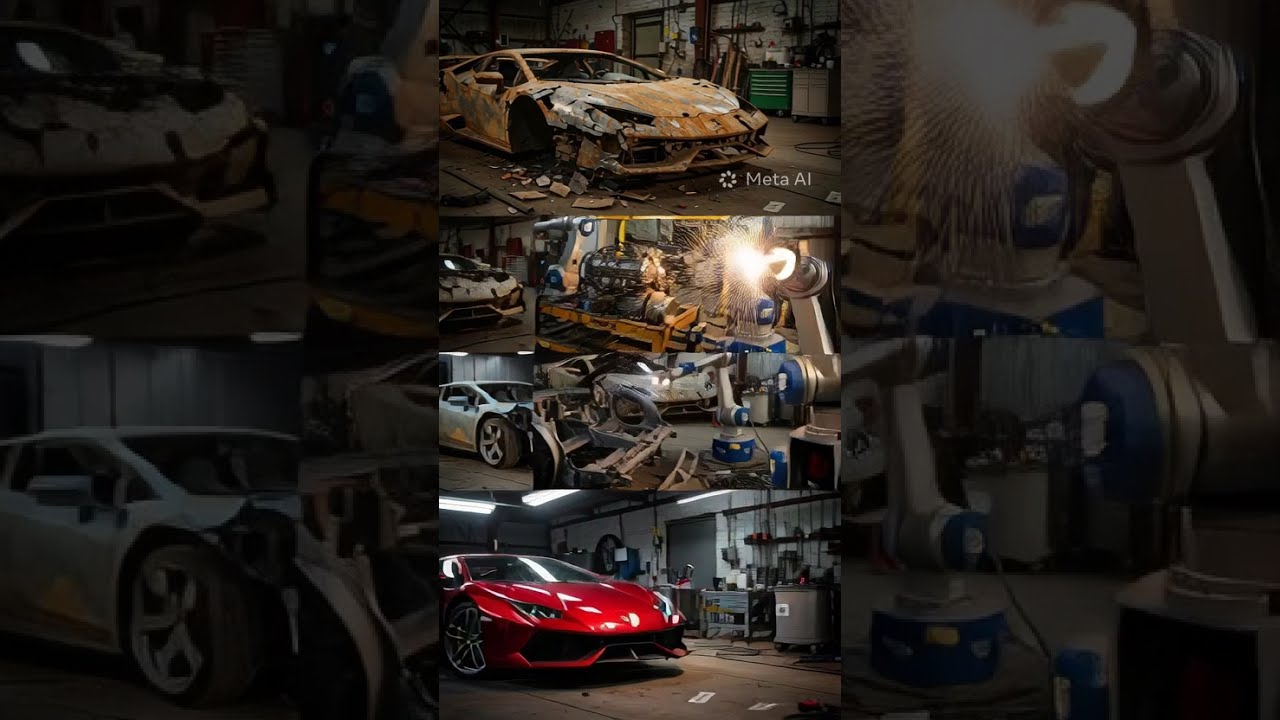
The digital landscape evolves constantly, yet few niches capture the imagination quite like the intersection of automotive passion and 3D design. We live in an era where the line between reality and computer-generated imagery blurs significantly. One prime example of this artistic convergence is the viral sensation of ASMR car restoration videos. Today, we explore a specific masterpiece: "ASMR Car Restoration in 10 Minutes." This video is not just a clip; it is a journey through the lifecycle of a machine, set against a calming forest backdrop, and designed to satisfy both the gearhead and the animation enthusiast.
For those looking to learn about the intricacies of 3D modeling or simply seeking relaxation, this content serves as a perfect case study. It combines high-fidelity textures, realistic physics, and immersive sound design. In this comprehensive article, we will break down why this genre succeeds, how the animation achieves photorealism, and why this specific video stands out in the crowded automotive content space.
You can watch the full experience here: ASMR Car Restoration in 10 Minutes.
The Phenomenon of ASMR in Automotive Content
Autonomous Sensory Meridian Response (ASMR) has transcended its initial niche to become a global powerhouse in media consumption. When creators apply ASMR principles to the automotive world, the results are strangely hypnotic. The clinking of wrenches, the hiss of spray paint, and the satisfying snap of parts locking into place create a sensory experience that relaxes the viewer.
This specific video capitalizes on these triggers. Unlike loud, music-heavy car modification shows, this animation focuses on the raw sounds of the machine. The restoration process becomes a rhythmic dance. Each bolt removal and every layer of rust removal serves a purpose. It allows the viewer to focus entirely on the task at hand, removing the distractions of the outside world. This focus is a key reason why millions of people tune in to watch a digital vehicle return to its former glory.
Why Digital Restoration Appeals to the Masses
Physical car restoration is expensive, dirty, and time-consuming. It requires a garage, thousands of dollars in tools, and years of expertise. However, digital restoration offers an idealized version of this process. In the world of animation, bolts do not strip, and rust always yields to the grinder. This video offers the satisfaction of a completed project in just ten minutes, a feat impossible in the physical realm.
- The timeline compresses weeks of work into a digestible format.
- The visual clarity allows viewers to see inner workings often hidden in real-life videos.
- The "satisfaction loop" of seeing something dirty become clean provides a dopamine hit.
- It appeals to a global audience as visual storytelling transcends language barriers.
Deconstructing the Visuals: The Forest and the Machine
A striking element of this video is its setting. Instead of a sterile garage, the animator places the car in a lush forest environment. This choice is significant for several reasons relating to design graphics and atmosphere. The organic chaos of the forest contrasts sharply with the rigid, mechanical geometry of the vehicle. This contrast highlights the engineering of the machine while grounding the scene in a relatable, peaceful reality.
The lighting in the forest environment presents unique challenges and opportunities for the animator. Light filters through the leaves, creating dappled shadows (gobos) that dance across the car's bodywork. As the restoration progresses, the reflection of the trees in the newly polished paint serves as a visual reward. It demonstrates the quality of the render and the "shininess" that signals completion.
Read too : Car Driving Indonesia - Roblox | Collect Money in Mega City | Best Games Online 2025
Texture and Materiality in 3D Animation
To make a viewer believe they are watching a real restoration, the textures must be impeccable. This video showcases advanced texturing techniques. The rust looks abrasive and flaky. The metal underneath appears cold and hard. The paint has depth and varying levels of glossiness depending on the stage of the restoration.
Achieving this look requires a deep understanding of PBR (Physically Based Rendering) workflows. The artist likely utilized maps for albedo, roughness, metallic, and normal values to simulate how light interacts with different surfaces. For the rust effects, procedural noises often combine with hand-painted details to ensure no two patches of corrosion look exactly the same. This attention to detail is what elevates the video from a simple cartoon to a photorealistic simulation.
The Technical Art: How It Is Made
For those eager to learn the craft behind the video, it is essential to understand the pipeline. Creating a ten-minute animation of this caliber is a monumental task. It involves several distinct stages of production, each requiring specific skills in the design graphics spectrum.
- Modeling: The artist creates the geometry of the car. This involves polygonal modeling to ensure the topology is clean and reflects light correctly without artifacts. Every screw, panel, and engine component needs a 3D mesh.
- Rigging: To move the parts, the car needs a "skeleton." Rigging allows the doors to open, the wheels to turn, and the engine parts to vibrate.
- Animation: This is where the movement happens. The animator sets keyframes to simulate the removal of parts. The timing is crucial here; it must feel heavy and mechanical, not weightless.
- Rendering: The computer calculates the light and shadow for every frame. In a forest setting, the computation of global illumination and ray tracing is intensive.
- Post-Processing: Finally, the artist adds color grading, motion blur, and lens effects to glue the visuals together.
Aspiring artists looking to replicate this quality should start by mastering the fundamentals of topology and lighting. Mastering 3D Car Animation: Creating Cinematic Pixar-Style Renders is an excellent next step for those ready to dive deeper into the specific techniques of rendering high-end automotive visuals.
Educational Value: Learn Automotive Anatomy
While the primary intent of the video is entertainment, it possesses a latent educational value. By stripping the car down to its chassis, the video reveals the automotive anatomy usually hidden beneath the sheet metal. Viewers gain a spatial understanding of how a suspension system connects to the frame, or how the exhaust routing weaves through the undercarriage.
For students of automotive engineering or mechanics, these animations provide a "clean" view of complex systems. You can see the distinct layers of the machine without the obstruction of grease and grime that plagues real-world learning. It visualizes the logic of assembly: what goes on first, what holds what, and how the systems integrate.
Project Specification Overview
| Video Title | ASMR Car Restoration in 10 Minutes |
| Primary Category | 3D Animation / Automotive |
| Visual Style | Photorealistic Rendering |
| Environment Setting | Natural Forest / Outdoor |
| Audio Design | ASMR (No Music, SFX Only) |
| Target Audience | Car Enthusiasts, ASMR Listeners, 3D Artists |
| Platform | YouTube |
| Content Focus | Vehicle Restoration & Assembly |
Sound Design: The Heart of ASMR
The visuals grab your attention, but the sound keeps you watching. In this video, the audio engineer—often the same person as the animator—plays a crucial role. This is where the concept of "Foley" comes into play. Since the car exists only in a computer, it makes no actual sound. Every noise must be recorded from real life or synthesized and then synchronized with the animation.
Consider the sound of sandpaper on rust. It is a gritty, textured sound. In the video, when you see the digital sanding block move, your brain expects that specific frequency. When the audio matches the visual perfectly, it creates a sense of "presence." This is vital for the ASMR effect. Soft clicks, heavy thuds of metal, and the ambient sounds of the forest (birds, wind in the trees) create a soundscape that envelops the viewer.
The "Unboxing" Effect of Restoration
Psychologically, car restoration videos share DNA with unboxing videos. There is a mystery to what lies beneath the dirt. As the restoration proceeds, the viewer uncovers the true form of the vehicle. The sound design accentuates this reveal. The crisp sound of a new part being installed signals a fresh start. It creates a narrative arc: from chaos and decay to order and beauty.
From Wreck to Showroom: The Restoration Stages
Let us walk through the specific stages depicted in the video to understand the narrative flow better.
1. The Assessment and Disassembly
The video begins with the vehicle in a state of neglect. The forest setting implies it has been abandoned for decades. The first stage is disassembly. This is often the most satisfying part for ASMR enthusiasts. Seeing parts removed systematically brings a sense of order. The animation handles the physics of heavy metal parts being lifted away, giving weight to the digital objects.
2. The Deep Clean and Rust Removal
Here, the transformation begins. The use of high-pressure water animations and sandblasting effects requires complex particle simulations. The animator must simulate how water deflects off irregular surfaces. The removal of rust reveals the bare metal, a blank canvas for the upcoming restoration.
3. Painting and Refinishing
Color returns to the machine. The application of primer and paint is a visual treat. The reflections change from dull matte to high-gloss. This stage showcases the rendering engine's ability to handle "clear coat" layers and environmental reflections. The forest reflects beautifully in the new paint, tying the subject back to its environment.
4. Reassembly and Final Reveal
The climax of the video is the reassembly. Clean, shiny parts find their home. The engine is lowered in, the suspension is bolted on, and the interior is fitted. The final shot usually features the car fully restored, idling in the forest, bridging the gap between nature and machine.
Why You Should Subscribe for More
Finding high-quality content that balances artistic integrity with entertainment value is rare. The channel Game_ID7 has curated a collection of videos that do exactly that. If this restoration video piqued your interest, their playlists offer a treasure trove of similar content.
You can explore more games and animations here: More Games & Playlists.
The Future of Automotive Content Creation
As software tools like Blender, Unreal Engine, and Maya become more accessible, we are seeing a democratization of high-end animation. Creators no longer need a Hollywood budget to produce Pixar-level visuals. This shift allows for more niche content, such as ASMR restoration, to flourish. It opens the door for storytellers who are passionate about cars to build their dream vehicles without ever touching a welding torch.
For the audience, this means an endless supply of creative, relaxing, and visually stunning content. We are moving away from traditional TV formats towards these user-driven, specific experiences that cater to exact interests—whether that is the sound of a ratchet or the visual of a perfect paint job in a virtual forest.
Conclusion
"ASMR Car Restoration in 10 Minutes" is more than just a video; it is a testament to the power of modern design graphics. It successfully merges the technical precision of automotive engineering with the artistic beauty of environmental design and the psychological comfort of ASMR. It invites the viewer to take a break, learn something new about the anatomy of a machine, and appreciate the digital artistry involved in bringing a rusted relic back to life.
Whether you are a 3D artist looking for inspiration on texturing and lighting, a car enthusiast missing the garage, or someone simply looking to unwind, this video delivers. The juxtaposition of the serene forest and the complex machine creates a unique aesthetic that lingers long after the video ends.
Do not forget to support the creator by watching the full video and exploring their other content. The world of digital automotive restoration is vast, and this video is the perfect entry point.
More Blender Video in this playlist : Playlist Blender Tutorial on YouTube
Link My Store in CGTrader : My Profile on CGTrader
Link My Profile in BlenderNation : My Profile on BlenderNation
Link My Store in BlenderMarket / SuperHive : My Store BlenderMarket ( SuperHive )
Like,Share, Comment, and Subscribe !!!
✨ Support Me :
Buy me a coffee: Buy me a coffee
Link Ko-Fi: Support me on Ko-fi
Link PayPal: Donate via PayPal
Please visit my store, if you want to buy you can via this link or contact me.
My LinkTree
Email : sofyantsaury63@gmail.com


